


When the Coen brothers released The Big Lebowski in 1998, the film failed to meet box-office expectations. Years later, with the arrival of video cassettes and then DVDs, it found its audience. The character of Jeffrey Lebowski, played by Jeff Bridges - with his unchanging vest, slow gait, and insistence that everyone simply call him The Dude - became a symbol for millions of people around the world. The Dude does not defeat the system with a plan and discipline; he simply refuses to play by its rules and somehow moves through it. Chris Camillo resembles this figure in one essential way: he also stands outside the standard profile of the professional investor, does not wear the suit of the others, and yet achieves results that most funds do not repeat. The difference is that in his case success does not come from carelessness, but from a consistent and time-consuming way of noticing changes that others have not yet seen.

Who Chris Camillo Is and Where His Approach Comes From
Camillo grew up as an Italian Catholic boy on Long Island, in a neighborhood populated mainly by Jewish families, during the 1970s and 1980s. As a teenager he began trading options through his older brother, who worked as a stockbroker, and at the same time he visited garage sales looking for undervalued items that he later resold. The family later settled in Dallas. There he graduated from Highland Park High School and enrolled at Southern Methodist University, where he studied finance. At university he became seriously interested in the markets: he skipped lectures to trade through the pay phone in the basement of the business school using Fidelity’s Touch-Tone system, obtained Series 6 and Series 63 licenses, and for a time worked cold-calling municipal bonds at Dean Witter. After graduation he went to Los Angeles intending to work in film, but ran out of money and for a while sold cars at Lexus, Porsche, and Toyota dealerships. He returned to Texas, took a job in sales, and only around 2006-2007, when he already had savings, decided to invest part of them according to his own method and to test whether observation of everyday life could give an edge over professional analysts.
From that point his story is known. Camillo started with about $20,000. For the period that Jack Schwager verifies and describes in Unknown Market Wizards - a multi-year stretch with an audited average annual return in the range of about 70-80 percent - the results are high and verified; later public claims of tens of millions come mainly from interviews and statements by Camillo himself and must be read as such, not as a continuation of the same verified record. He himself describes the approach as early as 2011 in Laughing at Wall Street. He has not gone through classical training in financial analysis inside an institution, has not worked as a portfolio manager, and does not claim that he can value companies better than professionals. He says he trades information, not price. The high results include periods of significant losses. One of them, which he himself has recounted, is a large loss from a single trade shortly before the pandemic that took a substantial part of his portfolio. The options and concentration he uses regularly amplify both the gains and these losses.
The Trades That Build His Story
Among the trades that build this story, several stand out that he himself has recounted publicly. One of the best known is the position in E.L.F. Cosmetics after the influencer Jeffree Star published a video in which he claimed that a cheap product of the brand was comparable to a far more expensive analogue. The video gathered millions of views; Camillo went to a store and observed people buying out the goods, then called analysts covering the sector and established that they had not seen the signal. Another frequently mentioned trade is around Mattel and the Barbie film, where the cultural moment preceded the market reaction. In earlier years his method captured consumer waves around products such as Ugg and Crocs, as well as signals from the beginning of the pandemic for companies that benefited from the shift of consumption online. More recent periods include a combination of positions in Amazon, Bloom Energy, and Robinhood, for which Camillo has said they brought him an eight-figure profit over a short stretch of time - according to him his strongest period in nearly two decades. These trades, however, require hours of daily observation of comments, trends, and real signals, not a casual glance at the world. Checking whether the signal is already known to institutions usually includes calls to analysts, review of reports, and observation of whether the topic appears in the media or in the consensus.
| Trade | Signal | Result according to Camillo | Note |
|---|---|---|---|
| E.L.F. Cosmetics | Jeffree Star video + store observation | Significant rise | Classic example of a cultural signal before analysts noticed it |
| Mattel / Barbie | Cultural moment around the film | Positive | Observation of mass reaction |
| Amazon (more recent periods) | Long-term thesis on cloud services and artificial intelligence | Eight-figure profit together with other positions | Often with options and high concentration |
| Bloom Energy + Robinhood | Combination of signals | Part of an eight-figure period | Short, high-return stretch |
| One trade before the pandemic | Publicly mentioned by Camillo himself | Substantial loss | Took a significant part of the portfolio |
How Social Arbitrage Works Today
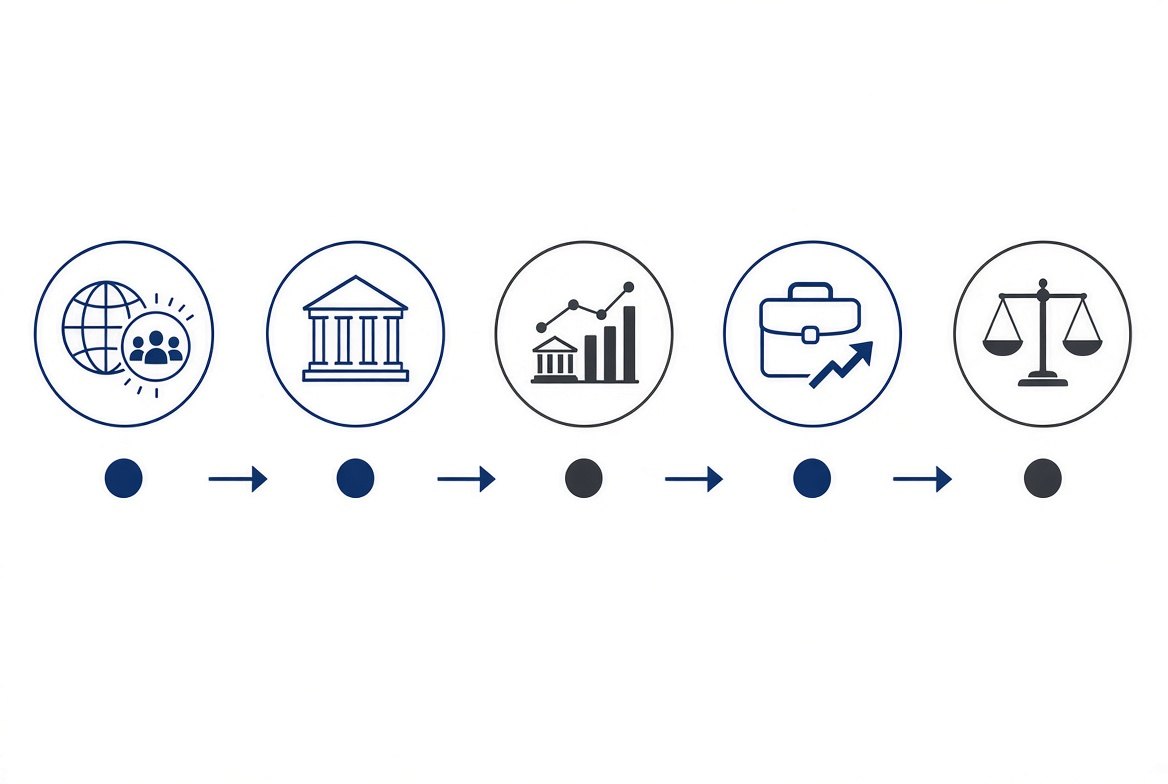
The method he calls social arbitrage or observational investing comes down to searching for change before it reaches institutional investors. The change may be in consumer habits, in cultural currents, in technology, or in something as concrete as the weather. Camillo watches comments on social networks - especially on TikTok - follows Google Trends, reads conversations, and looks at what people do in everyday life. When he notices something that in his view can increase or decrease the sales of a public company, he checks whether this information is still not widely known on Wall Street. If he judges that he has an information edge, he enters the position. He exits when the information becomes common knowledge and the price has reflected it, which in practice is seen in its appearance in reports, in analysts’ comments, or in broad media coverage. Today these windows are shorter than ten or fifteen years ago, because information spreads faster and part of the data, including Google searches, is polluted by content generated by artificial intelligence. Camillo himself has noted this change. Public sharing of observations in communities such as Dumb Money Live further narrows the edge, because the signal reaches more people more quickly. The process is not strictly linear: checking often leads to refusal, and the exit may have to be made earlier if the topic begins to be widely discussed before the reports.
Why Institutions Miss the Signals
Institutions miss these signals not because they are stupid, but because their processes are built around other data. Analysts read reports, build models, and follow the consensus. Data from social networks and from everyday life are noisy, difficult to formalize, and do not fit easily into standard frameworks. Camillo uses exactly this divergence. He does not claim that every viral trend is an investment opportunity; he looks for changes that in his view will affect a sufficiently large group of people or will have a tangible effect on a particular company.

What Camillo Does Now and Where the Concentration Lies
Today Camillo continues to invest with his own funds and at the same time leads Dumb Money Live - a community and media platform he runs together with partners, where observations on consumer behavior, cultural signals, and technological changes are shared. His main public focus lately has been on artificial intelligence and the related infrastructure and robotic developments. Among his larger current bets stands out a significant position in Amazon, which in some public estimates and statements occupies a large part of the portfolio and is often built with options and leverage. This concentration carries a principal risk: in these periods the result depends heavily on a single thesis, and correlation with a macro regime or with a particular piece of news can erase months or years of return in a short time. He also follows companies linked to energy infrastructure for artificial intelligence, as well as the long-term prospects around humanoid robots, though he emphasizes that real mass deployment will take years and will meet serious practical obstacles. His interest in Take-Two Interactive and the forthcoming products around GTA also appears in his public comments as a potential cultural signal. Concentration and leverage remain a central part of his way of working and carry the corresponding risk.
The results are exceptional and precisely for that reason must be read carefully. The average annual return cited for the audited periods is in the range of about 70-80 percent - figures that almost no professional fund achieves sustainably, but which include the effect of options and of high concentration. Camillo makes relatively few trades with high conviction. The method requires constant and time-consuming observation - often hours a day - as well as the discipline to abandon when the information is already known. It is not a substitute for long-term investing and does not cancel fundamental analysis; it is a separate way of seeking a short- to medium-term edge that works only if a person truly sees something markets have not yet priced and is ready to bear the risk that comes with it.
In his public statements Camillo describes artificial intelligence as the largest and fastest change he has seen, and therefore as the greatest opportunity. He is skeptical of overly rapid timelines for humanoid robots and emphasizes that the hard part is not the demonstration, but years later - the deployment, reliability, safety, and trust. At the same time he believes that people will not disappear, but will reorganize around the new tools and will create value in new ways. His advice to the ordinary investor comes down to several practical things: to set aside regular time for observation of specific signals in everyday life and on social networks, to check actively whether they are already known to analysts or appear in reports and the media, to enter only when the edge is clear and to exit when it disappears - that is, when the topic appears in reports, in analysts’ comments, or receives broad media coverage - as well as to update constantly the strongest argument against one’s own thesis. Concentration is justified only with high conviction and with readiness for loss. In the end he believes that ordinary people can have an edge precisely because they are not bound by the processes of large institutions - provided they devote the time, check the signals, and bear the risk.
The Dude remains in memory not because he defeats the system with genius, but because he refuses to pretend that he plays by other people’s rules. Camillo does not refuse the rules and does not rely on carelessness; he simply plays by other rules that require discipline, time, checking, and readiness to lose when the signal turns out to be wrong. And in this is the difference that makes his story interesting not only as a portrait of one man, but as a question to everyone who tries to understand how an edge is created in markets and what price it has.
Frequently Asked Questions
Can an ordinary investor achieve results close to those of Camillo?
Not on the same scale and not sustainably, because the audited periods show a high average annual return, but it includes options, high concentration, and hours of daily observation. For most people the expected value of such an approach is positive only if it is applied selectively, with a limited position size and with a clearly defined risk of losing the entire capital in the individual trade. Without these conditions the risk of ruin grows quickly.
How do options and leverage change the risk profile?
They convert the information edge into an asymmetric payoff, but at the same time increase the probability of complete loss of the invested capital in the particular position. Camillo uses this structure because with high conviction the expected value remains positive even after accounting for the losses. For a portfolio that cannot bear a decline in value of 30-50 percent in one theme, the size of such positions should remain small - usually under 5-10 percent of total capital - or be expressed through risk-defined structures rather than naked options.
What are the main risks of social arbitrage today?
The first is that the windows close faster, because information spreads instantly and part of the data is polluted by content generated by artificial intelligence. The second is that public sharing of signals in communities narrows the edge even before the position is built. The third is concentration: when a large part of the portfolio depends on a single thesis, as with Amazon in some of Camillo’s periods, correlation with the macro regime or with a particular piece of news can erase months or years of return in a short time.
How should position size be determined in such an approach?
Size is determined by the clarity of the information edge and by the risk of ruin, not by conviction measured in emotion. If the signal is checked, institutions do not yet see it, and the exit is defined, the position can be larger. If the check is incomplete or markets are already discussing the topic, the size is reduced or the trade is declined. The rule is simple: never bet so much that one wrong thesis takes the portfolio out of the game for years ahead.
Is this method suitable as the main strategy of the portfolio?
No, because it is a satellite approach for seeking a short- to medium-term asymmetric edge, not a substitute for the long-term allocation of capital. The main part of the portfolio should remain in positions with lower volatility and with a clearer link to fundamentals, while social arbitrage is used only when there is a real information edge and when the size is limited. Otherwise the method turns the entire capital into a bet on the ability to see signals before others - something that even with Camillo is not infallible.
Important notice
This article is for information and education only. It is not financial advice, an investment recommendation or professional advice of any kind. The views expressed are the author’s personal opinions and are not recommendations to buy, sell or hold securities, assets or investments. Investing involves substantial risk, including the possible loss of all capital. Past performance is not a guarantee of future results. Each reader should conduct independent research, consult a qualified financial adviser and weigh financial circumstances, risk tolerance and investment objectives before taking any decision. The author and borsite.net accept no liability for any loss arising from the use of the information in this article.
Leave a Reply
Трябва да влезете или да се регистрирате, за да публикувате коментар.