Data as of 6 November 2026
On 18 June 1815 at Waterloo, Napoleon had about 72,000 soldiers against the combined forces of the Duke of Wellington (about 68,000) and the approaching Prussian army under Blucher. The battle opens with French attacks on the Allied center and right wing. For hours French artillery and cavalry appear close to a breakthrough. Wellington holds the line at heavy cost, but his position remains vulnerable until the Prussians appear on the French right flank. Blucher’s arrival changes the balance. The Prussian blow is not decisive on its own, but it forces Napoleon to redistribute forces and gives Wellington a chance to hold the center. When the French Imperial Guard is repulsed in the final attack, the line collapses. Victory is not only Wellington’s tactical superiority. It is the result of the Allies holding long enough for incoming reinforcement to change the balance of forces.
The week that ended on 6 November 2026 is not Waterloo for the markets. It does, however, contain an element that is often underestimated. Leveraged strategies and trend-following strategies also amplified the decline - together with the news, not instead of it. How large that contribution was cannot be measured from available data. The question is not whether we are watching the end of the trend, but whether selling pressure is already largely exhausted - an answer that will come from capital expenditures and from the next sessions, not from a single number. If the Prussian blow at Waterloo was the additional force that changed the balance, on markets today that blow would be continued data-center capital spending despite political risk. For memory companies that would support the thesis that the decline was mainly about positioning. For optics companies the Marvell-Lumentum deal risk remains even if spending continues. For companies that rent out computing power, prices will keep reacting sensitively to spending news. If spending actually slows, the front will not hold for any of the three groups. If the concerns prove to be temporary noise, some companies will turn out to have been oversold - but not all to the same degree.
Moves in the technology sector and the artificial-intelligence cycle
On Thursday, 5 November, S&P 500 companies lost approximately $2.9 trillion of market capitalization - the largest one-day loss of value in nominal dollars, according to market estimates after the session. Nasdaq Composite companies lost about $2.5 trillion. The seven largest technology companies lost more than $1 trillion, with Nvidia alone losing more than $440 billion as the share fell about 9.3%. The Nasdaq Composite fell 5.52% and entered a technical correction, while the S&P 500 declined 4.36%. The S&P 500 information-technology sector fell more than 7%, and the Philadelphia Semiconductor Index plunged more than 12%.
The decline was not limited to semiconductors. It covered the entire artificial-intelligence sector. Companies that rent out computing power were hit hard: CoreWeave fell nearly 10%, and Nebius about 15%. Companies tied to memory and optics (Lumentum, Seagate, Western Digital, Marvell, Sandisk, Micron) lost between 15% and more than 20% on Thursday alone. AMD was also among the sharpest declines in semiconductors, though it is not in the group of the seven largest.
These categories overlap. Nvidia’s loss is part of the loss at the seven largest, which is part of Nasdaq and of the S&P 500. The figures must not be added together.
Part of the decline in Lumentum and Marvell is tied to the acquisition announced on 2 November: all-stock, with an implied enterprise value of about $115 billion for Lumentum, a fixed ratio of 4.5 Marvell shares for one Lumentum share, and expected close in the first half of 2028. The deal is announced, not completed. Its value floats with the share prices.
In the Asian session on 5 November - before Wall Street’s close the same day - tension was visible as well. According to Yonhap, the KOSPI closed down 5.28%. According to Focus Taiwan, Taiwan’s TAIEX closed at -3.2%.
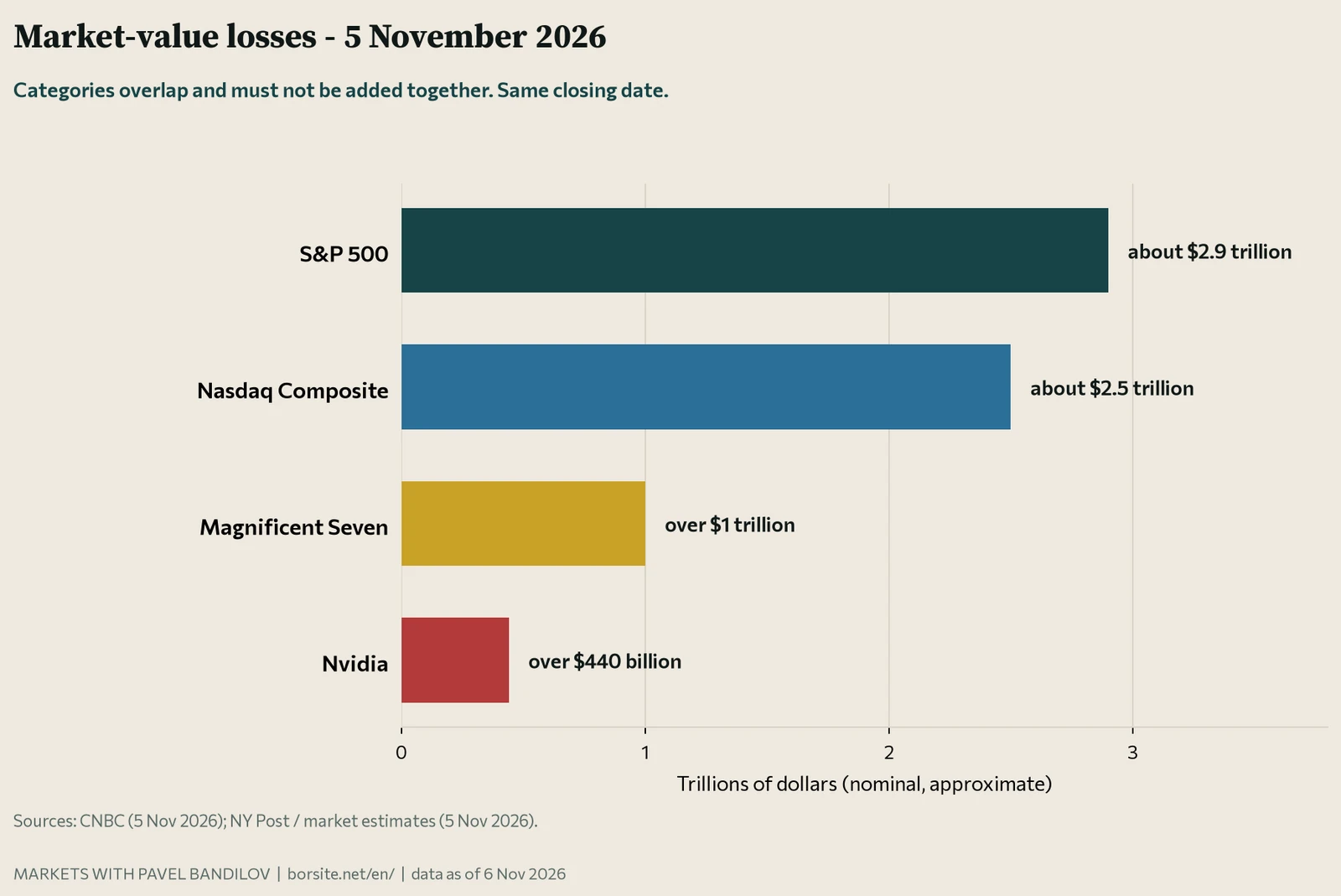
Fig. 1. Market-cap loss on 5 Nov 2026. Categories overlap and must not be added together.
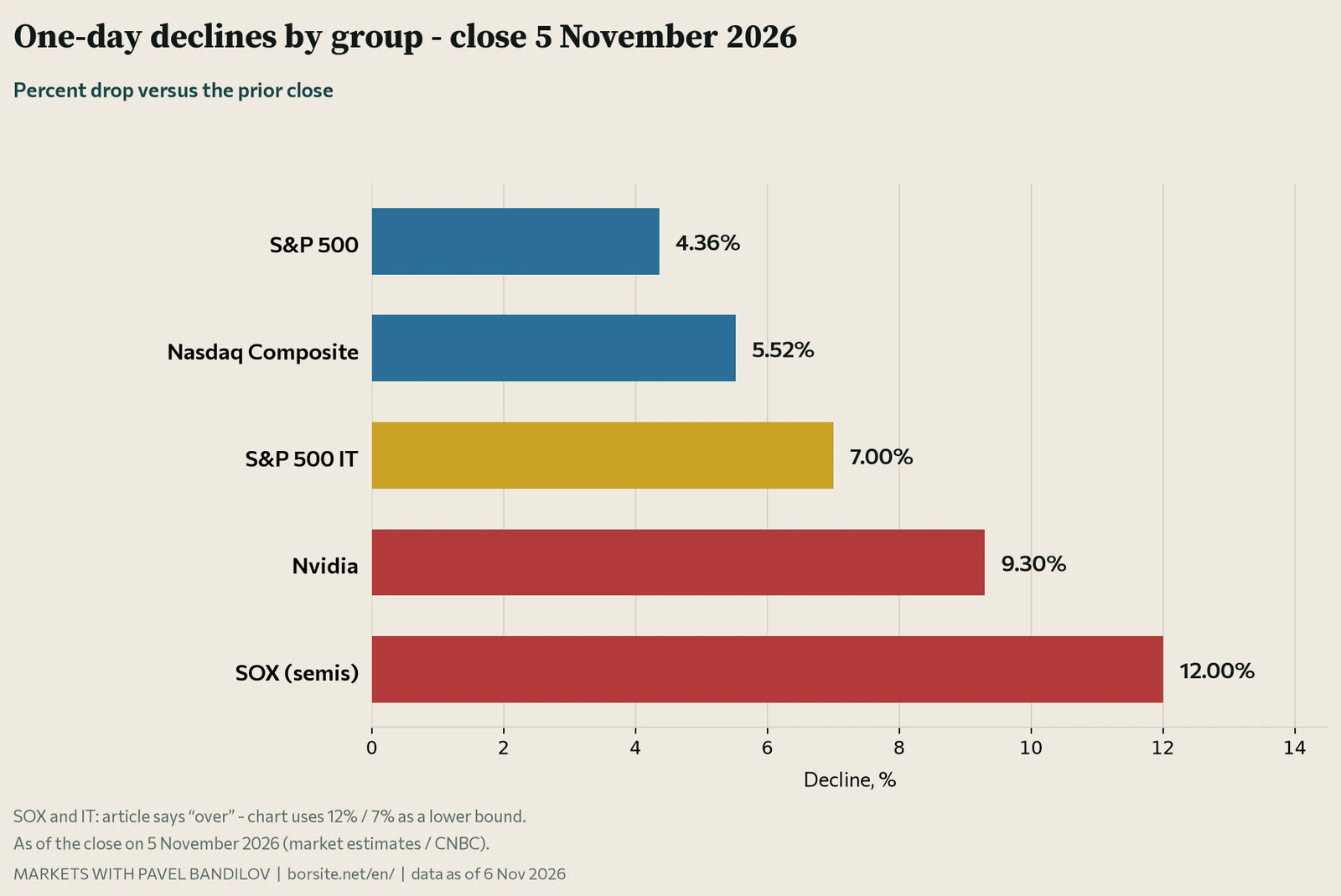
Fig. 2. One-day declines by group (close 5 Nov 2026).
Table 1. Different businesses and risks in one selloff
| Segment | Examples | What differentiates the risk |
|---|---|---|
| Memory (NAND, DRAM, HBM) | Sandisk, Micron | Memory price cycle, inventories, earnings revisions |
| Mass storage (HDD) | Seagate, Western Digital | Different model vs NAND; data-center demand, different profitability |
| Optics and connectivity | Lumentum, Marvell | Announced deal, dilution of existing shareholders, timeline to 2028 |
| Rented compute | CoreWeave, Nebius | Customer capex, debt, revenue concentration |
| GPU and AI accelerators | Nvidia, AMD | Accelerators and server chips; different weight in indexes and portfolios |
Participants, institutional behavior, and leverage by segment
Thursday’s pressure came from several directions at once: individual investors, institutions, and - as an accelerator - trend-following strategies and leverage-based strategies. Without public data on daily net flows by participant type, one cannot say who the “main” source was. The sharpest one-day declines were in memory and optics companies (Lumentum, Seagate, Western Digital, Marvell, Sandisk, Micron), in Nvidia among the seven largest, and in AMD as a semiconductor company outside that group. At CoreWeave and Nebius prices move more sharply, and concentration in a small number of names amplified the move.
Funds leveraged on the Nasdaq-100 can also amplify a decline. To keep their daily exposure after a sharp drop, they must reduce positions. That adds selling when prices are already falling. At CoreWeave and Nebius, prices reacted sensitively to capital-expenditure news.
The VIX volatility index jumped to about 28 - the largest one-day rise since “Liberation Day” in April 2025.
On Friday the market partly recovered from Thursday’s lows. Semiconductors led higher. The bounce may reflect exhaustion of some daily mechanical selling or a temporary rebound - it does not prove that pressure has ended. The same day, the US October employment report was released. Strong labor data affect monetary-policy expectations, but they do not replace the question of capital spending in artificial-intelligence infrastructure.
How much money actually left the AI stock market
The difference between erased market value and real capital outflows is central to reading the week. S&P 500 companies lost approximately $2.9 trillion of market value on Thursday alone. The Nasdaq Composite lost about $2.5 trillion. Those figures describe a revaluation of existing positions in technology companies. They do not show how much money was actually withdrawn from the market.
Table 2. Erased market value versus flows
| Metric | Value | What it means |
|---|---|---|
| S&P 500 value loss (5 Nov) | about $2.9 tn | Revaluation; includes the tech giants |
| Nasdaq value loss (5 Nov) | about $2.5 tn | Revaluation; overlaps S&P and does not sum with it |
| Magnificent Seven loss | over $1 tn | Subset of the above |
| Nvidia loss | over $440 bn | Subset of the Magnificent Seven |
| Systematic / leverage selling | extra pressure on prices | Rule-based position cuts; estimates differ by method and are not a directly observed exchange flow |
Much of the move was a revaluation of already existing positions and a change in leverage on them. Deleveraging can amplify the revaluation, but available data do not allow the contribution to be separated precisely - and do not allow the exact net outflow of long-term capital to be measured. A loss of market value is not the same as a proven flow. The decline came with a revaluation of specific companies; whether and how much long-term capital left the sector remains unknown from public data.
For Sandisk, Seagate, and Western Digital the main question is whether demand from data centers will keep growing. For Lumentum and Marvell the deal adds a separate risk. For CoreWeave and Nebius, financing and demand for computing power remain important.
Prices, multiples, and analyst targets after the decline
For Lumentum and Marvell, part of the decline is tied to the announced deal. After the announcement, a number of analysts cut their targets for both companies. Such revisions are a guide to a change in sentiment, not proof of fair value.
For memory companies - Sandisk, Seagate, and Western Digital - prices fell sharply from prior highs. For the seven largest technology companies and for compute-rental companies, prices also declined, but the risks and growth expectations remain different from those in memory and mass storage. To judge whether a stock is cheap, we need to compare the price with expected earnings and account for where the company sits in the cycle.
Sandisk has been listed on Nasdaq as an independent company since 24 February 2025, after separation from Western Digital. The short standalone listing history does not allow convenient five-year multiple comparisons for today’s Sandisk. A low cyclical multiple by itself does not make the stock cheap. Micron shares the memory cycle, including HBM exposure, but is not a mirror of Sandisk. Seagate and Western Digital are closer to mass storage via hard drives - a different business model from NAND and DRAM. In the optical segment there is additional revaluation because of the deal.
Table 3. What to watch by segment
| Company | Ticker | Key risk | What to watch |
|---|---|---|---|
| Sandisk | SNDK | NAND cycle; short standalone listing history | Memory prices, company forecasts, free cash flow, debt |
| Micron | MU | Memory and HBM into AI | HBM and DRAM prices, customer capex |
| Seagate | STX | HDD / capacity | Data-center orders, profitability |
| Western Digital | WDC | HDD after Sandisk separation | Capacity, post-separation structure |
| Lumentum | LITE | Deal announced, not closed | Timeline to 2028, terms, company forecasts |
| Marvell | MRVL | Dilution and integration | Deal terms and timeline, expected combination benefits |
| Nvidia | NVDA | Positioning and capex expectations | Data-center revenue |
| AMD | AMD | Competition in accelerators | Share in AI accelerators, company forecasts |
| CoreWeave / Nebius | CRWV / NBIS | Debt and customer concentration | Contracts, utilization, financing |
Fear, greed, red flags, and buying opportunities
The VIX jumped to about 28, which shows a sharp rise in expected volatility. Broad indexes as of 6 November remain far from classic bear-market levels (a decline of at least 20% from the peak). The correction is concentrated in the artificial-intelligence infrastructure segment, which until a week ago was among the most crowded with expectations. Whether the pressure is mainly positioning, or whether a deeper fundamental change is already underway, will be seen from capital expenditures - not from a single indicator.
Signs that some mechanical pressure is easing would include a decline in daily volumes in leveraged strategies versus Thursday and the absence of a new catalyst. VIX stabilization is simply one signal among others and by itself cannot confirm that selling has finished or that there is no fundamental change. What remains decisive are announced forecasts and orders for data-center capital expenditures in the coming weeks and months. If spending actually slows, the fear will have a fundamental basis. If not - part of the decline may turn out to be linked mainly to market participants’ positioning. The uncertainty here is real.
The red flags are concrete and measurable. The first is political risk to the pace of new data-center projects. It is not abstract. The Democratic victory in both chambers and local results in Texas and other states created a concrete probability of slower approval for new sites and stricter energy-consumption requirements. Until the elections the market had priced relatively unimpeded capacity expansion. That does not mean an immediate halt to already approved projects, but it changes the economics of new investment. For a sector whose valuation over the past two years was built on the expectation that capital spending would keep growing quickly, even a moderate slowdown is enough to trigger a revaluation.
The second red flag is high concentration in positions before the decline. Leveraged strategies, as well as those that follow market moves, had built positions in memory companies, optics, and the seven largest technology names at a scale that made the market vulnerable to any catalyst. Forced position cuts can accelerate a decline regardless of long-term expectations for the companies. Systematic selling is not a single mechanism, however: leveraged ETFs with a daily reset sell after a drop; funds that target a set volatility reduce exposure when volatility rises; trend-following strategies react to price and trend signals.
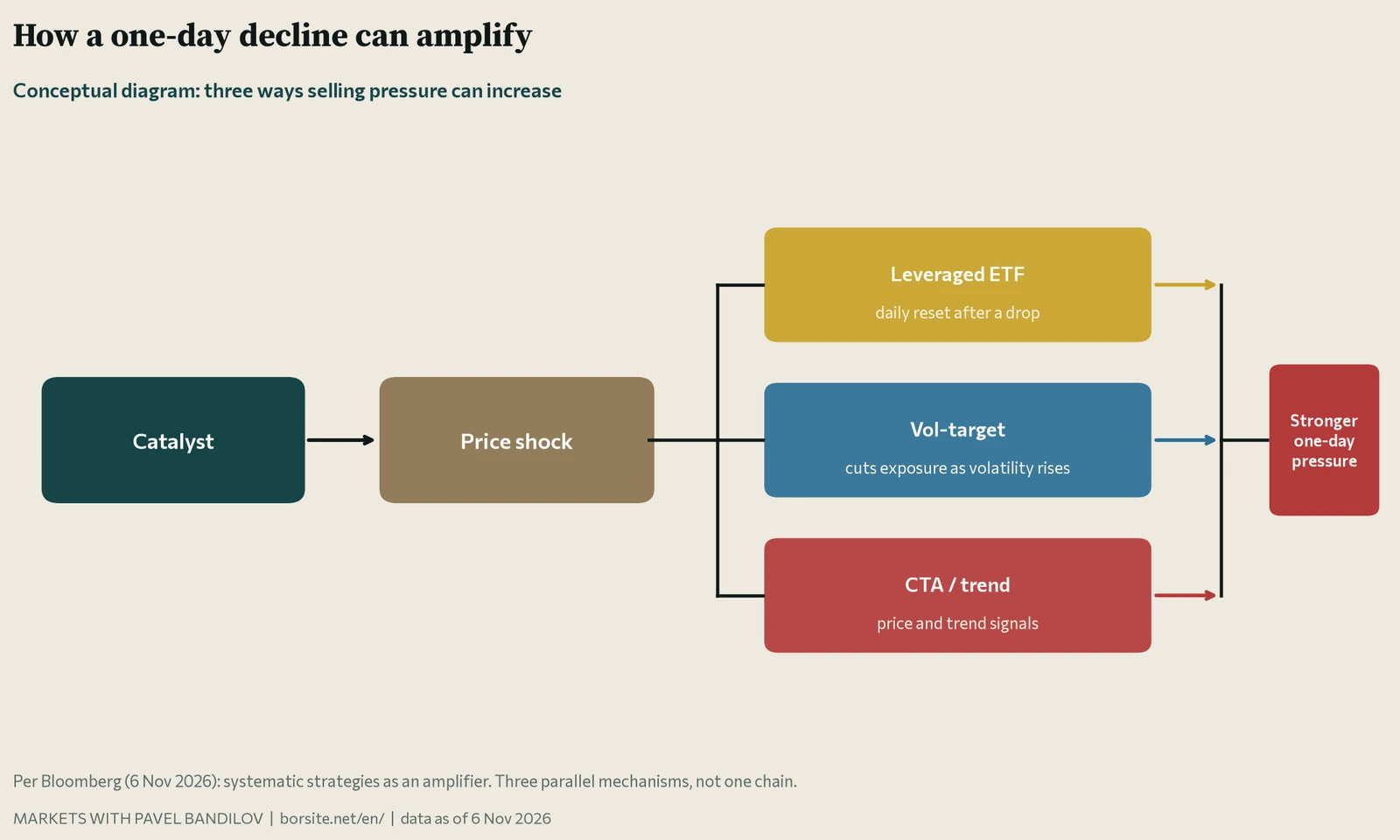
Fig. 3. Conceptual diagram: three ways selling pressure can increase.
The third is valuation risk in the optical segment. The Marvell-Lumentum deal showed that some participants were willing to pay a high price for an optical company near a potential cycle peak. That is not a general feature of the whole sector, but it may prove valid for this specific segment.
Opportunities - if there are any - come from the same source that created the decline. Selling drove prices down sharply for memory and mass-storage companies. Sandisk, Seagate, and Western Digital are down from their own highs. That is not an automatic buy signal and not proof that they are “cheap.” It is a condition under which the risk asymmetry can change if political risk does not materialize into a real and lasting slowdown in capital spending. For the seven largest and for compute-rental companies the decline was also sharp, but the risks differ. Opportunity there depends even more on whether capital spending continues at the pace the market priced before the elections. Confirmation will come from capital-expenditure data in the coming quarters, not only from prices in the next trading sessions.
If capital expenditures continue at the pre-election pace, for Sandisk, Seagate, and Western Digital that would support the thesis that part of the decline was about positioning. For Micron the logic is similar, but the company also carries other risks. For Lumentum and Marvell continued spending would not remove the deal risk. For Nvidia and AMD prices react to the same capital-expenditure question, but their weight in indexes and portfolios differs. For CoreWeave and Nebius, confirmation of stated capex would be an important sign, but their prices react sensitively to any slowdown. If spending actually slows - for example if announced forecasts or orders fall versus the companies’ prior plans - then even Sandisk and Seagate would be under pressure, while Lumentum, Marvell, CoreWeave, and Nebius would take a stronger fundamental revaluation.
Main reasons for the decline
The decline cannot be reduced to a single factor. It is the result of three separate but interacting forces stacking: political risk to the pace of capital spending, specific corporate events in the optical segment, and intensified pressure from leverage and systematic strategies.
The first and most visible reason is political. The Democratic victory in both chambers of Congress and especially results in states with a high concentration of data-center projects (above all Texas) changed expectations for the regulatory environment. Political risk is not abstract. It already has concrete local manifestations and creates uncertainty about the pace of future capital expenditures.
The second reason is specific to the optical segment. The Marvell-Lumentum deal of about $115 billion, announced immediately before the decline, raised questions about both the acquisition price and the timing. Post-announcement target revisions reflect both dilution of existing shareholders and the risk that the deal is near peak levels for the sector - without being proof of fair value.
The third reason is the buildup of leveraged positions and the action of systematic strategies. When leveraged strategies must cut positions and, at the same time, strategies that follow the market sell the same companies, they reinforce each other.
Market analogy: March 2020 and selling under pressure
The mechanics of the present decline resemble the forced selling of March 2020 and, to some extent, late 2018. In both cases the initial shock is amplified by leverage and systematic strategies. In March 2020 the shock was external and systemic - the pandemic stopped economic activity worldwide. Now it is political and concentrated in one segment of artificial-intelligence infrastructure. The recovery after March 2020, however, also happened against a backdrop of extraordinary monetary and fiscal measures, not only because forced flows were exhausted.
The takeaway from this analogy is that the strength of a decline often exceeds the fundamental revaluation. If political risk does not materialize into a real and lasting slowdown in capital spending, part of the present move may turn out to be an opportunity in specific positions rather than a structural change in the cycle. The most important task today is to separate positioning pressure from fundamental risk. The first can exhaust quickly. The second requires watching capital expenditures in the coming quarters. For Sandisk, Seagate, and Western Digital the analogy points more toward the first. For Lumentum, Marvell, CoreWeave, and Nebius it points to the need to watch the second.
Bear market or correction - conclusions
At Waterloo Wellington’s victory did not come from delivering a decisive early blow. It came from the front holding long enough for allied force to change the balance of power. On markets the question is analogous. Selling under pressure created a sharp downward move in specific companies, but it does not by itself change the long-term economics of the artificial-intelligence cycle. If data-center capital expenditures continue, that would be the Prussian blow that changes the balance - and would support the thesis that for Sandisk, Seagate, and Western Digital part of the decline was about positioning. It does not prove it on its own. For Lumentum and Marvell the risk from the announced deal’s price remains. For CoreWeave and Nebius prices will keep reacting strongly to spending news. If spending actually slows, the front will not hold.
Broad indexes as of 6 November are not in classic bear territory - a decline of at least 20% from the peak. That does not rule out a deeper decline later. The correction so far is concentrated in the overcrowded artificial-intelligence infrastructure segment. Whether this is a buying opportunity or a signal to reduce exposure depends on whether political risk materializes into a real slowdown in capital spending. The price decline alone is not enough to assume that all of these risks are already priced in. Time will show whether selling pressure is exhausted or a longer regrouping follows.
Frequently asked questions
How can we tell that the selloff is over?
Today there is no way to know with certainty. Signs include a decline in daily mechanical selling versus Thursday, the absence of a new catalyst, and stable signals on capital expenditures. Stabilization of the VIX alone is not enough.
What is the leverage level after Thursday?
Friday’s bounce does not show how much leverage remains in the market. Some funds reduce positions daily, while others react to changes in volatility and the market trend. That is why selling can continue after the initial shock.
Are the most heavily sold positions already cheap?
No general conclusion can be drawn. A lower price does not necessarily mean a cheap stock. For Lumentum and Marvell there is also additional deal risk.
What is the real political risk for data centers?
The risk is real, but not unambiguous. The Democratic victory and local results in Texas create the possibility of slower approval for new projects. The key question is whether that leads to a real slowdown in capital expenditures.
Is this a buying opportunity, or a signal to reduce exposure?
It depends on the horizon and the specific company. Selling under pressure drove prices down sharply. Whether that is a long-term opportunity will be clear from the level of capital expenditures in the coming quarters - not only from the next trading sessions.
How much money actually left the AI stock market?
Erased market value was about $2.9 trillion in the S&P 500 and $2.5 trillion in Nasdaq, but that is a revaluation. Capitalization does not measure flows; the exact net outflow of long-term capital remains unknown from public data.
Subscription
If you want the next market analyses in English, subscribe at borsite.net/en. The blog publishes three timely market articles a week.
Disclaimer
This material is general analysis and education. It is not personal investment advice and not a call to buy or sell securities. Markets are volatile; valuations carry uncertainty; data are as of the stated dates. Do your own research and consult a licensed adviser if needed.
Sources
1. Sandisk - Nasdaq listing after separation from Western Digital, 24 Feb 2025 https://www.sandisk.com/company/newsroom/press-releases/2025/sandisk-celebrates-nasdaq-listing-after-completing-separation
2. Marvell / Lumentum - official announcement, 2 Nov 2026 https://investor.marvell.com/news-events/press-releases/detail/1040/marvell-and-lumentum-to-combine-creating-a-category-leader-in-ai-connectivity
3. CNBC - the selloff, Magnificent Seven, Nvidia, sector statistics, 5 Nov 2026 https://www.cnbc.com/2026/11/05/stock-market-selloff-ai-fears.html
4. NY Post - S&P value loss about $2.9 tn / Nasdaq about $2.5 tn, 5 Nov 2026 https://nypost.com/2026/11/05/business/stunning-losses-on-wall-street-as-sp-500-nasdaq-see-biggest-market-cap-drops-ever-in-wake-of-midterms/
5. Yonhap - KOSPI -5.28%, 5 Nov 2026 https://en.yna.co.kr/view/AEN20261105007251320
6. Focus Taiwan - TAIEX -3.2%, 5 Nov 2026 https://focustaiwan.tw/business/202611050014
7. CNBC - October employment report, 6 Nov 2026 https://www.cnbc.com/2026/11/06/jobs-report-october-2026.html
8. Bloomberg - systematic strategies as amplifier of the tech decline, 6 Nov 2026 https://www.bloomberg.com/news/videos/2026-11-06/how-fast-money-systematic-funds-stoked-2-3t-tech-rout-video